Key Highlights
- Sight words help children read faster and more confidently.
- Fun activities improve memory and learning interest.
- Daily practice works better than long study sessions.
- Hands-on games make learning exciting for kindergarten kids.
- Parents and teachers can easily use these activities at home or school.
Learning to read is one of the biggest milestones in early childhood. For kindergarten kids, recognizing common words quickly helps build reading confidence and improves fluency. That is why sight words activities are so important during the early learning years.
Sight words are common words that children see often while reading. Words like “the,” “is,” “and,” “you,” and “can” appear regularly in books and worksheets. When children recognize these words instantly, reading becomes smoother and less stressful.
The good news is that learning sight words does not have to feel boring. With playful activities and creative games, children can learn naturally while having fun.
In this blog, you will discover simple and effective sight words activities that parents, preschool teachers, and homeschooling families can easily try with kindergarten kids.
What Are Sight Words?
Sight words are frequently used words that children should recognize instantly without sounding them out every time.
Some sight words follow phonics rules, while others do not. Because of this, repeated exposure and practice are important.
Examples of Common Kindergarten Sight Words
- the
- and
- is
- it
- can
- see
- we
- you
- go
- like
These words appear regularly in beginner reading books and worksheets.
Why Are Sight Words Important for Kindergarten Kids?
When children learn sight words early, reading becomes easier and more enjoyable.
Benefits of Learning Sight Words
Improves reading fluency
Builds confidence in young readers
Helps children understand stories better
Encourages independent reading
Supports spelling and writing skills
Most importantly, children feel proud when they can recognize words quickly.
Best Sight Words Activities for Kindergarten Kids
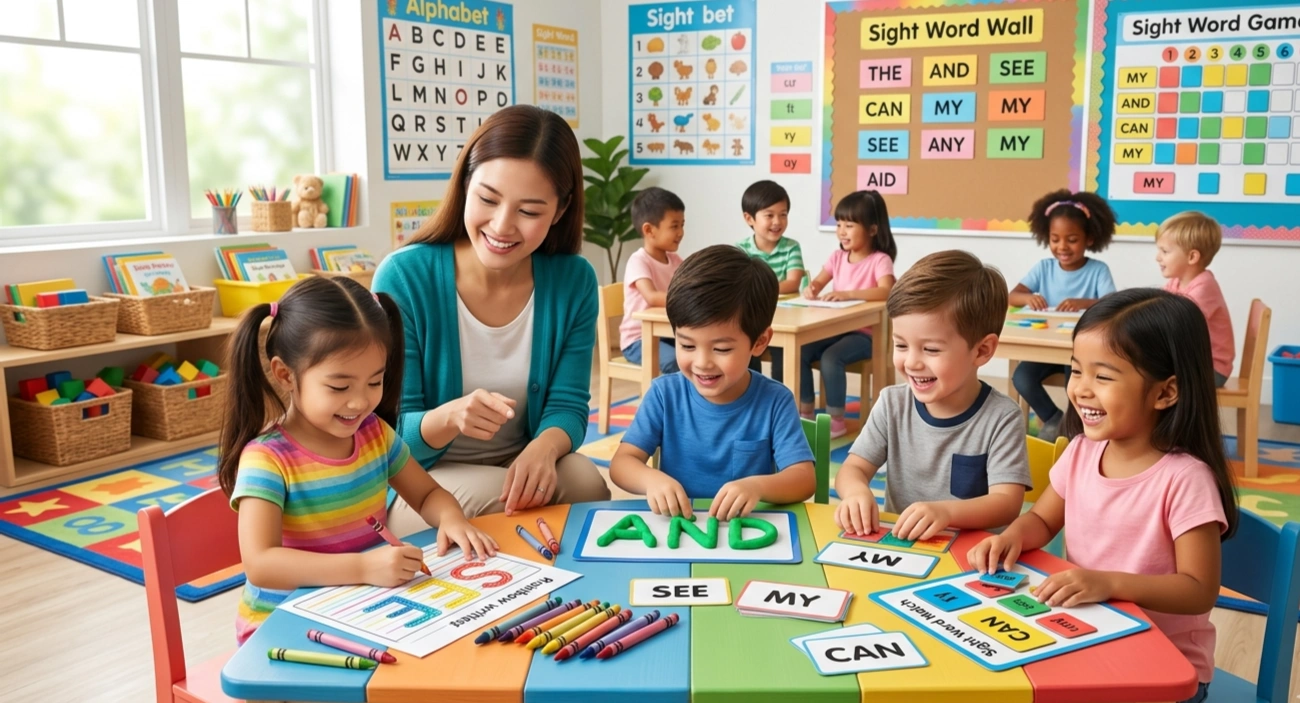
Here are some fun and easy sight words activities that make learning exciting.
1. Sight Word Flashcard Game
Flashcards are one of the easiest ways to practice sight words.
How to Play
- Write one sight word on each card.
- Show the cards one by one.
- Ask your child to read the word aloud.
- Reward correct answers with claps or stickers.
Extra Tip
Use colorful cards or add small drawings to make learning more attractive.
2. Sight Word Hunt
Children love searching for hidden things.
Activity Idea
- Write sight words on sticky notes.
- Hide them around the room.
- Ask your child to find and read each word.
This activity combines movement and learning, which keeps kids active and focused.
3. Rainbow Writing Activity
This creative activity helps children remember words through repetition.
What You Need
- Crayons or sketch pens
- Paper
- List of sight words
How It Works
Children write the same sight word multiple times using different colors.
For example:
- the
- the
- the
Each word can be written in a different color like rainbow shades.
4. Sight Word Bingo
Bingo is always a classroom favorite.
How to Prepare
- Create bingo cards with sight words.
- Call out one word at a time.
- Children cover the matching word.
The first child to complete a row wins the game.
This activity improves listening and word recognition skills.
5. Play Dough Sight Words
Hands-on activities work wonderfully for kindergarten learners.
Activity Steps
- Give children play dough.
- Ask them to shape letters and create sight words.
This sensory activity strengthens fine motor skills while teaching reading.
6. Sight Words with Sand or Rice
Young children enjoy touch-based learning.
Simple Setup
- Fill a tray with sand or rice.
- Say a sight word aloud.
- Let children trace the word using their fingers.
This activity is calming and helps children remember letter shapes better.
7. Sight Word Memory Match
Memory games make learning interactive.
How to Play
- Create two cards for each sight word.
- Place cards face down.
- Children flip two cards at a time to find matches.
Every time they find a pair, they must read the word aloud.
Easy Daily Routine for Sight Words Practice
Consistency is the secret to success.
Simple 15-Minute Routine
| Activity | Time |
|---|---|
| Flashcards Practice | 5 Minutes |
| Fun Game Activity | 5 Minutes |
| Reading Small Sentences | 5 Minutes |
Tips for Parents and Teachers
Helping children learn should feel positive and encouraging.
Helpful Teaching Tips
- Start with 3–5 new words at a time
- Repeat words regularly
- Celebrate small progress
- Use praise and encouragement
- Keep learning playful and stress-free
Children learn best when they feel happy and relaxed.
Common Mistakes to Avoid
Sometimes adults accidentally make learning harder for children.
Avoid These Mistakes
- Forcing long study sessions
- Teaching too many words together
- Comparing children with others
- Using only worksheets without games
Remember, every child learns at their own pace.
Printable Sight Words Activities Ideas
Parents and teachers can also create printable activities like:
- Word tracing worksheets
- Color-by-sight-word pages
- Match the word activities
- Cut-and-paste games
- Simple reading sentences
Printable activities are excellent for both classrooms and homeschooling.
Conclusion
Teaching sight words does not need to feel difficult or stressful. With playful games, hands-on activities, and short daily practice, kindergarten kids can learn to recognize words naturally and confidently.
These simple sight words activities help children enjoy reading while building strong early literacy skills. Whether you are a parent, preschool teacher, or homeschooling family, small fun moments every day can make a big difference in your child’s learning journey.
Keep learning joyful, encouraging, and full of smiles.

VedaPlay Toys Review (2026) | Montessori Wooden Learning Toys
August 29, 2026[…] Sight Words Activities […]