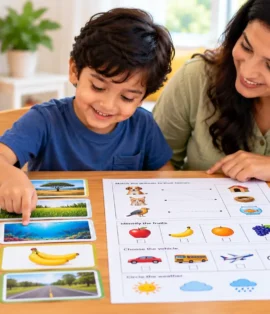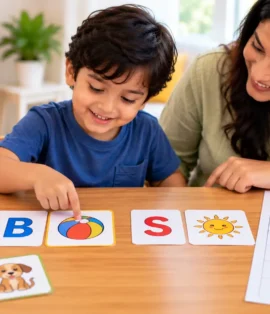
Before children begin writing letters and numbers, they need time to practise the movements that make writing possible. Drawing lines, making circles, tracing curves and playing with crayons are all simple ways to prepare little hands for early writing.
These early experiences help children become familiar with pencil movements while developing hand control, coordination and confidence.
The good news is that pre-writing practice doesn't have to involve sitting at a desk with a worksheet. Children can draw in sand, make shapes with playdough, follow paths with their fingers and use everyday objects to practise small hand movements.
In this guide, we'll explore 12 fun pre-writing activities for preschoolers that parents and teachers can try at home or in the classroom. You'll also learn which strokes to practise first and how printable worksheets can support your child's early writing journey.
What Are Pre-Writing Activities?
Pre-writing activities help children develop the skills they need before learning to write letters and numbers independently.
These activities focus on the basic movements used in handwriting, such as drawing straight lines, making curves, tracing circles and controlling a crayon or pencil.
Common pre-writing strokes include:
-
Vertical lines: Drawing straight lines from top to bottom.
-
Horizontal lines: Drawing lines from left to right.
-
Diagonal lines: Drawing slanting lines in different directions.
-
Curved lines: Making smooth curves and bends.
-
Circles: Drawing rounded shapes.
-
Zigzag lines: Moving the pencil through a series of sharp turns.
-
Loops and waves: Practising continuous, flowing movements.
Children don't need to master every stroke before exploring letters. The aim is to give them opportunities to practise different movements, strengthen coordination and become comfortable using writing tools
Why Are Pre-Writing Activities Important for Preschoolers?
Pre-writing practice supports several skills that children gradually develop as they prepare for handwriting.
1. Develops fine motor skills
Activities such as drawing, colouring, squeezing playdough and picking up small objects help children practise the hand and finger movements involved in writing.
2. Improves pencil control
Tracing and drawing give children opportunities to control the direction and movement of crayons, markers and pencils.
3. Builds hand-eye coordination
Following a path or copying a shape encourages children to coordinate what they see with how they move their hands.
4. Introduces basic writing strokes
Straight lines, curves and circles appear in many letters and numbers. Practising these movements can help children become familiar with the shapes used in handwriting.
5. Builds confidence and independence
Children get to experiment, make marks and try again without the pressure of producing perfect letters.
Every child develops at a different pace. Some children may enjoy drawing long before they are ready to hold a pencil comfortably, while others may prefer hands-on activities before attempting paper-based tasks.
12 Fun Pre-Writing Activities for Preschoolers
These activities use simple materials and playful methods to help children explore lines, curves and shapes. Start with movements your child finds comfortable and introduce new challenges gradually.
1. Draw Vertical and Horizontal Lines
Straight lines are a useful starting point for pre-writing practice.
What you need: Paper, thick crayons or washable markers.
How to play:
-
Draw a few large vertical lines from top to bottom.
-
Show your child how to draw a similar line.
-
Next, draw horizontal lines from left to right.
-
Invite your child to copy the lines in their own way.
You can turn the activity into a simple drawing game. Ask your child to draw rain falling from clouds using vertical lines or a road using horizontal lines.
Keep the lines large and give your child plenty of space to practise.
Learning benefit: Introduces basic directional movements and helps children become comfortable making marks on paper.
2. Practise Curved Lines and Waves
Curved lines help children explore smooth, flowing pencil movements.
What you need: Paper and crayons or markers.
Draw a few large curves, waves and wavy paths on a sheet of paper. Ask your child to follow each path with a finger first, then try tracing it with a crayon.
You can make the activity more interesting by turning the curves into pictures.
For example, wavy lines can represent ocean waves, while curved lines can become hills or rainbow shapes.
Encourage your child to move slowly and follow the general direction of the line rather than worrying about staying perfectly inside it.
Learning benefit: Develops visual tracking and introduces curved movements used in drawing and early handwriting.
3. Trace Circles and Simple Shapes
Circles and other basic shapes give children opportunities to practise moving their hands in different directions.
What you need: Shape cards, paper and crayons.
Draw large circles, squares, triangles and rectangles. Show your child how to trace each outline with a finger before trying it with a crayon.
Begin with circles and simple straight-sided shapes. Introduce more complex outlines when your child is ready.
You can also ask your child to turn the shapes into familiar pictures, such as a sun, a house or a flower.
Learning benefit: Builds familiarity with outlines, curves, corners and the movements used to draw simple shapes.
4. Draw Lines in Sand
Sensory tracing is a fun alternative to practising on paper.
What you need: A shallow tray and a small amount of clean, child-safe sand or another suitable sensory material.
Spread the material across the tray and demonstrate how to draw a vertical line, horizontal line or circle using one finger.
Invite your child to copy the movement. Then gently smooth the surface so they can try again.
You can also place a simple pattern card beside the tray for your child to follow.
Supervise the activity and make sure the material is appropriate for your child's age.
Learning benefit: Allows children to practise movements using their fingers before introducing a writing tool.
5. Follow a Path with a Crayon
Path-tracing games give pre-writing practice a playful purpose.
What you need: Paper with simple paths and a thick crayon.
Draw a path connecting two pictures. For example, create a straight road from a house to a tree or a curved path from a rabbit to a carrot.
Ask your child to guide the crayon along the path to reach the destination.
Start with wide, straight paths. As your child becomes more comfortable, introduce curves, gentle zigzags and narrower paths.
Avoid making the paths too small or complicated for beginners.
Learning benefit: Encourages controlled movements, visual tracking and hand-eye coordination.
6. Make Lines and Shapes with Playdough
Playdough is a simple way to strengthen hands through creative play.
What you need: Child-safe playdough and a flat surface.
Ask your child to roll the playdough into long pieces and arrange them into different patterns.
They can create straight lines, curved lines, circles and zigzags.
For an additional challenge, show a simple pattern card and ask your child to recreate it using playdough.
Let your child explore freely before introducing more structured shapes.
Learning benefit: Encourages hand and finger movements, tactile exploration and awareness of shapes.
7. Use Tongs to Pick Up Objects
Picking up and moving objects can help children practise the small hand movements involved in using writing tools.
What you need: Child-safe tongs, large pom-poms or similarly sized objects, and two bowls.
Place the objects in one bowl and ask your child to transfer them to the other bowl using the tongs.
You can add a sorting element by asking them to separate objects by colour.
Choose tongs that are easy for small hands to squeeze and objects that are too large to pose a choking risk.
Learning benefit: Encourages hand strength, coordination and controlled finger movements.
8. Draw Zigzags and Loops
Once your child is comfortable with straight and curved lines, introduce more varied movements.
What you need: Paper and crayons.
Draw a large zigzag line and demonstrate how to follow its sharp turns.
Next, introduce loops and simple repeated patterns.
Turn the activity into a drawing challenge. Zigzags can become mountains, loops can become butterfly trails and wavy lines can become rivers.
Allow your child to use broad movements rather than focusing on perfect accuracy.
Learning benefit: Encourages directional changes and helps children explore more complex drawing patterns.
9. Practise with Finger Painting
Finger painting gives children an opportunity to make marks without needing to hold a pencil.
What you need: Child-safe, washable finger paint and suitable paper.
Show your child how to use a finger to make straight lines, dots, circles and curves in the paint.
You can also create a simple pattern and ask your child to copy it.
For example, draw a circle followed by a straight line, then invite your child to repeat the sequence.
Protect the working surface and supervise children to prevent paint from being swallowed or rubbed into their eyes.
Learning benefit: Encourages sensory exploration and helps children practise different hand movements in a relaxed setting.
10. Copy Simple Line Patterns
Pattern copying encourages children to observe a movement and reproduce it.
What you need: Paper, crayons and simple pattern cards.
Create a row of basic patterns, such as:
-
Vertical line, vertical line, vertical line.
-
Circle, circle, circle.
-
Zigzag, straight line, zigzag.
-
Curve, curve, straight line.
Ask your child to copy the pattern underneath.
Begin with one type of movement before combining different patterns.
Don't worry if the copies look different from the examples. The goal is to practise observing and reproducing simple marks.
Learning benefit: Supports visual attention, movement planning and early pattern recognition.
11. Colour and Draw Inside Large Shapes
Colouring gives children an opportunity to practise moving a crayon across a defined area.
What you need: Paper with large pictures or outlines and washable crayons.
Choose pictures with broad, simple shapes. Ask your child to colour the shapes and then draw a few lines or patterns inside them.
For example, they might colour a large circle and add short lines around it to make a sun.
Encourage comfortable hand movements and allow children to explore different directions.
Staying completely inside the outline is not necessary, especially for beginners.
Learning benefit: Encourages visual guidance, hand control and familiarity with drawing within boundaries.
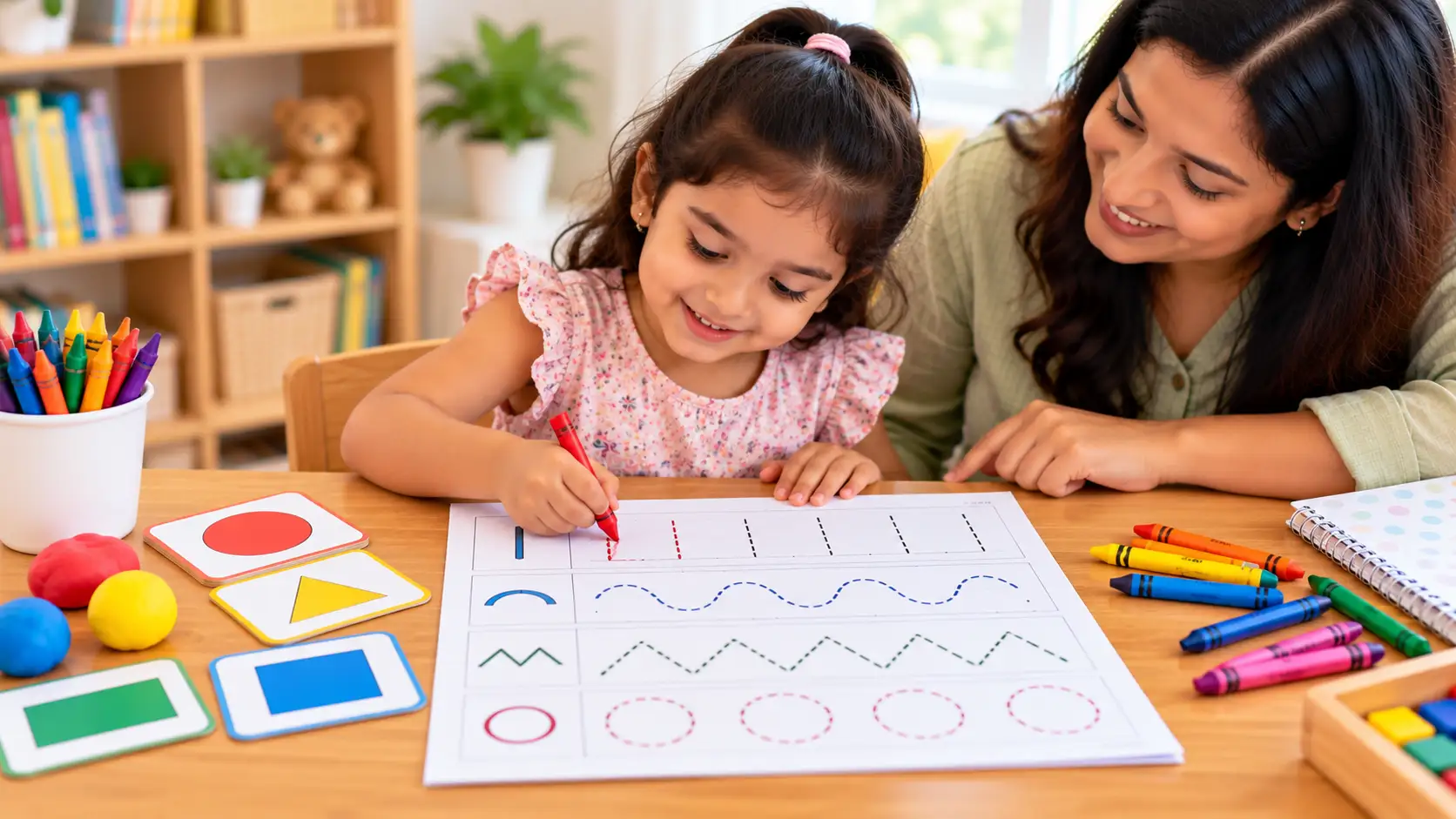
12. Practise with Printable Pre-Writing Worksheets
After exploring drawing and sensory activities, printable worksheets can provide more structured practice.
Choose worksheets that feature large, simple patterns and enough space for children to move their writing tools comfortably.
Useful worksheet activities include:
-
Vertical and horizontal lines: Trace straight lines across a page.
-
Curved paths: Follow wavy lines and rounded patterns.
-
Shape tracing: Trace circles, squares and triangles.
-
Zigzag patterns: Follow lines with repeated turns.
-
Path tracing: Connect two pictures by following a line.
-
Pattern copying: Recreate simple combinations of lines and shapes.
Start with large patterns and broad tracing paths. As your child becomes more comfortable, introduce smaller patterns and simple letter-like strokes.
Explore Kids Easy Learning for printable learning resources and suitable pre-writing worksheets to support early writing practice at home.
For the best results, combine worksheets with playdough, drawing, sensory tracing and everyday activities. Children benefit from exploring movements in different ways rather than repeating the same worksheet every day.
Which Pre-Writing Strokes Should Children Learn First?
There is no single sequence that every child must follow, but starting with simple movements can make early practice more manageable.
| Pre-writing movement | Example activity | What children practise |
|---|---|---|
| Vertical lines | Draw falling rain | Up-and-down movements |
| Horizontal lines | Draw a road | Side-to-side movements |
| Circles | Draw a sun | Rounded movements |
| Crosses | Draw two intersecting lines | Combining movements |
| Diagonal lines | Draw slanting rain | Direction changes |
| Curved lines | Draw hills and waves | Smooth, flowing movements |
| Zigzags | Draw mountain peaks | Repeated directional changes |
| Loops | Draw looping trails | Continuous movements |
These activities are suggestions, not strict developmental milestones. Let your child explore movements at a comfortable pace and revisit easier patterns when needed.
How to Help Your Child Develop Pencil Control
Pencil control develops gradually through practice and everyday hand movements. You don't need to rely on worksheets alone.
Offer suitable writing tools. Thick crayons and short, child-friendly drawing tools may be easier for some preschoolers to manage.
Encourage drawing freely. Let your child draw pictures, make marks and experiment with different movements.
Include hands-on play. Playdough, building blocks, simple puzzles and safe sorting activities provide opportunities to use the hands and fingers.
Use large tracing patterns. Broad lines and simple paths allow children to explore movements without needing precise control.
Provide a comfortable working space. Make sure your child can sit comfortably and reach the paper without straining.
Keep practice short and enjoyable. Offer activities when your child is interested and take breaks when they become tired.
Children do not need to hold a pencil perfectly or form letters neatly before they can enjoy pre-writing activities. Focus on exploration, comfort and gradual progress.
Common Mistakes to Avoid During Pre-Writing Practice
A few simple adjustments can make early writing activities more enjoyable.
Starting with complicated patterns: Begin with simple lines and large shapes before introducing narrow paths and detailed patterns.
Expecting perfect tracing: The goal is to practise movement, not to produce flawless lines.
Using only pencil-and-paper activities: Sensory play, drawing and hands-on tasks offer different ways to develop coordination.
Making sessions too long: Children may lose interest when they are asked to repeat the same movement too many times.
Correcting every mark: Allow children to experiment and make their own drawings rather than focusing only on accuracy.
Comparing children with others: Fine motor development and writing readiness vary. Focus on your child's individual progress.
Frequently Asked Questions
Tracing straight lines, drawing circles, following curved paths, making shapes with playdough, finger painting and copying simple patterns are useful pre-writing activities. Printable tracing worksheets can provide additional practice once children are comfortable exploring basic movements.
Pre-writing activities encourage children to control their fingers and hands while drawing, tracing, squeezing and manipulating materials. These movements provide opportunities to develop the coordination needed for tasks such as drawing and early handwriting.
Lines and shapes are useful starting points because they help children explore the movements found in many letters. However, children can also become familiar with letters through books, names and playful activities while continuing to practise basic strokes.
Yes. Age-appropriate worksheets can help children practise straight lines, curves, shapes and tracing paths. They work best alongside free drawing, sensory activities and hands-on play rather than being the only form of practice.
Short, enjoyable sessions are a good starting point. Offer a few minutes of drawing or tracing and adjust the duration to your child's interest and comfort. Everyday drawing and hands-on play can provide additional opportunities to practise.
Thick crayons, washable markers, large paper sheets, playdough, simple tracing cards and suitable sensory materials are useful options. Choose materials that are easy for your child to handle and appropriate for their age.
Make Early Writing Fun with Kids Easy Learning
Preparing to write doesn't have to mean filling page after page with tracing exercises. Children can build familiarity with lines, curves and shapes through drawing, sensory play, playdough and simple everyday activities.
Start with movements your child enjoys, offer opportunities to practise and introduce more structured activities as their confidence develops.
When your child is ready for guided practice, printable pre-writing worksheets can provide a convenient way to explore tracing patterns and early writing movements at home.
Explore Kids Easy Learning for printable learning resources that support fine motor development, pre-writing practice and early education.