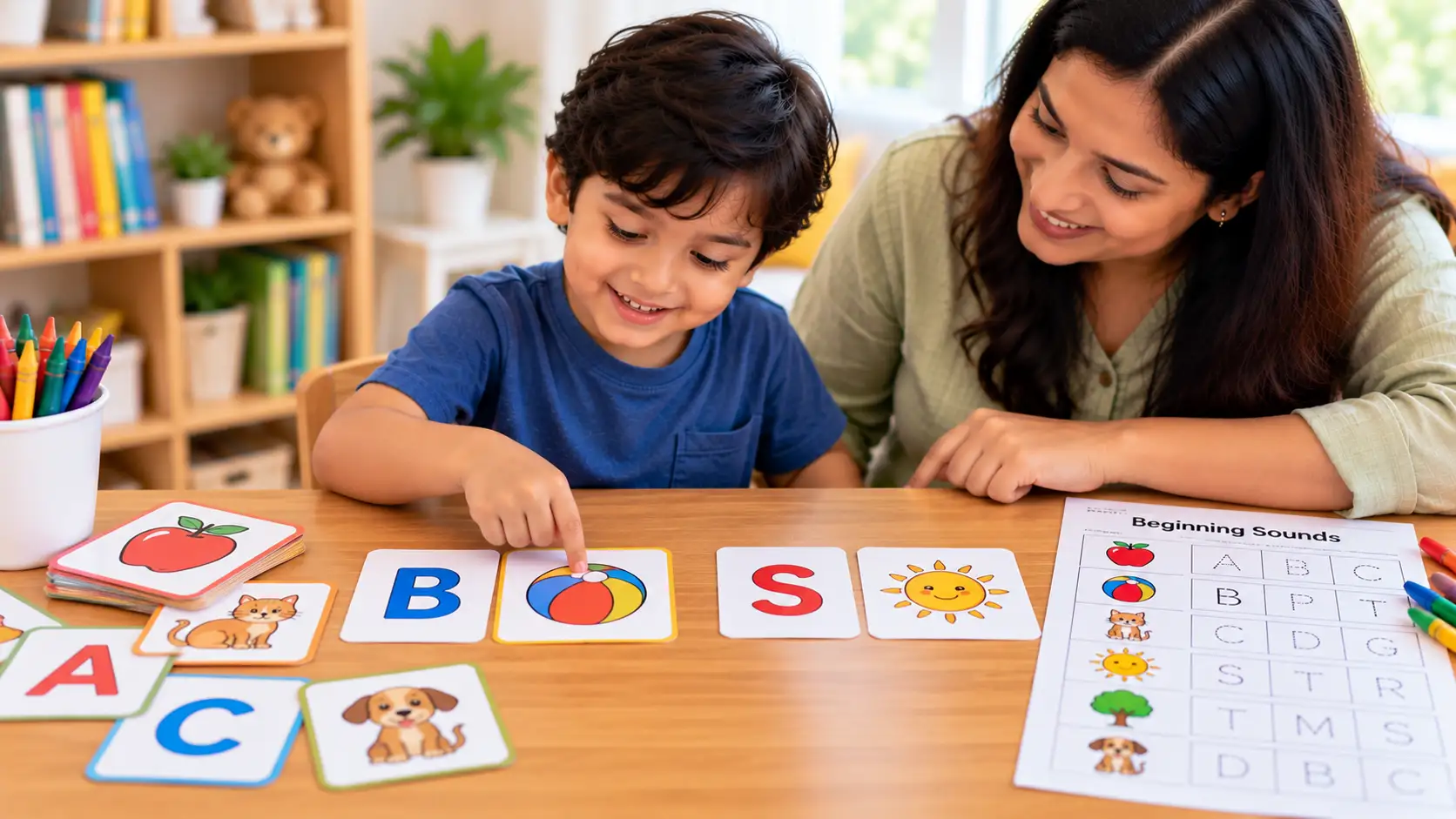
Have you noticed your child saying “b-b-ball” or “s-s-sun” while looking at a picture? That's an early step towards learning phonics!
Beginning letter sounds help children understand the sounds they hear at the start of words. This skill supports early reading, spelling and word recognition. When children learn that ball begins with the /b/ sound and sun begins with the /s/ sound, they start connecting spoken words with the letters that represent them.
The best part is that you don't need complicated teaching materials to practise phonics at home. Picture cards, toys, storybooks and everyday objects can all become useful learning tools.
In this guide, we'll explore 12 fun beginning letter sounds activities that parents and teachers can use to help preschool and kindergarten children develop early phonics skills. You'll also find practical tips for introducing letter sounds and using printable worksheets to reinforce learning.
What Are Beginning Letter Sounds?
Beginning letter sounds are the sounds heard at the start of spoken words.
For example:
-
A as in apple — /a/
-
B as in ball — /b/
-
C as in cat — /k/
-
M as in moon — /m/
-
S as in sun — /s/
The letter name and the letter sound are not always the same. For example, the letter B is called “bee,” but its usual beginning sound in ball is /b/.
When children practise beginning sounds, they learn to listen carefully to words, recognise their first sounds and connect those sounds with letters.
This skill is part of phonological awareness and early phonics learning. It helps prepare children for decoding simple words when they begin reading.
Why Are Beginning Letter Sounds Important for Kids?
Learning initial sounds gives children an important foundation for reading and writing.
1. Builds phonics awareness
Children begin to understand that spoken words contain individual sounds and that letters represent those sounds.
2. Supports early reading
Recognising beginning sounds helps children connect written letters with the sounds they hear in familiar words.
3. Develops listening skills
Sound games encourage children to listen carefully and notice how words begin.
4. Prepares children for spelling
When children can identify the first sound in a word, they can begin connecting sounds with letters during early writing.
5. Builds confidence with letters
Matching letters to familiar words helps children see how alphabet learning connects with everyday language.
Children develop these skills at different rates, so keep practice playful and offer plenty of opportunities to listen, repeat and explore.
12 Fun Beginning Letter Sounds Activities for Kids
These activities use simple materials to help children identify and practise beginning sounds. Start with familiar words and sounds that are easy to distinguish.
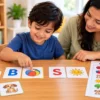
1. Match Letters with Picture Cards
Picture cards are a simple way to introduce beginning sounds.
What you need: Alphabet cards and picture cards showing familiar objects.
How to play:
-
Choose a letter, such as B.
-
Show your child pictures of a ball, cat, banana and sun.
-
Say each word slowly, emphasising its first sound.
-
Ask your child to find the picture that begins with /b/.
-
Repeat with other familiar letters.
Start with a few pictures at a time. Once your child understands the activity, introduce more choices.
Choose familiar words with clear beginning sounds so children can focus on listening rather than guessing unfamiliar picture names.
Learning benefit: Helps children connect letter symbols with the initial sounds in spoken words.
2. Go on a Beginning Sound Hunt
Turn your home into a phonics playground by searching for objects that begin with a particular sound.
Choose a sound, such as /m/, and ask your child to find something that starts with that sound.
Depending on the objects available, they might find a mug, mat or marker.
Say each object's name together and emphasise the beginning sound. For example, “Mmm, mug. Mug starts with /m/.”
You can also play the game while walking around the classroom, garden or another familiar environment.
Learning benefit: Helps children connect phonics with real-world objects and everyday vocabulary.
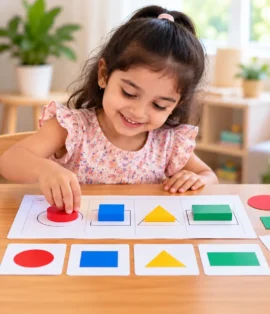
3. Play the Beginning Sound Sorting Game
Sorting games help children group words according to their initial sounds.
What you need: Picture cards featuring familiar words that begin with two different sounds.
Choose two letters, such as S and M. Place a letter card at the top of each group.
Show your child a picture card and say the word together. Ask them to listen to the first sound and place the card in the matching group.
For example:
-
Sun goes with S.
-
Moon goes with M.
-
Sock goes with S.
-
Mug goes with M.
Keep the number of cards small at first, then gradually add more.
Learning benefit: Encourages children to listen carefully, compare sounds and recognise similarities between words.
4. Use Toy Animals to Learn Letter Sounds
Animal names provide familiar examples of beginning sounds.
Gather a few toy animals or animal picture cards. Say each animal's name and emphasise its first sound.
For example:
-
Bear begins with /b/.
-
Cat begins with /k/.
-
Dog begins with /d/.
-
Fish begins with /f/.
Ask your child to choose an animal and tell you which sound they hear at the beginning.
You can extend the game by asking your child to find another animal or object that starts with the same sound.
Learning benefit: Builds sound recognition using familiar vocabulary and engaging objects.
5. Play “What Sound Does It Start With?”
This game requires no special materials and can be played almost anywhere.
Say a familiar word, such as sun, and ask your child what sound they hear at the beginning.
If they need help, stretch the beginning sound slightly: “Ssssun.”
Try simple words such as:
-
Ball
-
Moon
-
Fish
-
Cup
-
Hat
-
Pig
Avoid adding an extra vowel to consonant sounds when modelling them. For example, say /m/ rather than “muh” where possible, so children can hear the sound clearly.
If your child gives the wrong answer, repeat the word slowly and help them listen again.
Learning benefit: Develops listening skills and helps children identify the first sound in spoken words.
6. Match Household Objects to Letters
Everyday household items can become phonics teaching materials.
Choose a few safe objects, such as a cup, book, spoon or toy car.
Place an alphabet card beside each object and ask your child to identify the letter that matches its beginning sound.
For example, a book can be matched with B because book begins with /b/.
Say the word together and emphasise the first sound. You can also ask your child to find another object that begins with the same sound.
Choose objects with familiar names, as children may use different words for the same item.
Learning benefit: Connects letter sounds with familiar words and makes phonics part of daily life.
7. Sing Letter Sound Songs
Songs and rhymes can help children remember letter sounds through repetition.
Choose an age-appropriate alphabet or phonics song that emphasises letter sounds, not just letter names.
Sing together and show a matching picture or object when a sound appears. For example, when practising /s/, show a picture of the sun or a sock.
Pause before the next sound and invite your child to say it.
You can also make up simple rhymes using familiar words that begin with the same sound.
Learning benefit: Reinforces sound recognition, listening and memory in an enjoyable way.
8. Play a Beginning Sound Basket Game
A sound basket is a hands-on activity that can be adapted to different letters.
What you need: A small basket and a collection of safe household objects or picture cards.
Choose a letter, such as C, and place a few objects in the basket. Include items such as a cup, a toy car and a book.
Ask your child to pick up one item, name it and listen to its first sound.
If the word begins with /k/, place it in the matching group. If it starts with a different sound, set it aside.
Use familiar objects and help your child name them accurately before identifying their sounds.
Learning benefit: Encourages active listening, vocabulary development and sound sorting.
9. Try a Beginning Sound Guessing Game
Make phonics practice feel like a little mystery game.
Think of a familiar object and give your child a clue about its beginning sound.
For example, say, “I'm thinking of something that starts with /b/. You can bounce it and play with it.”
Your child might guess ball.
You can also use pictures instead of verbal clues. Show three images and ask your child to identify the one that begins with a particular sound.
Take turns giving clues so your child can practise listening and speaking.
Learning benefit: Encourages children to connect initial sounds with familiar words and use clues to solve problems.
10. Use Alphabet Puzzles and Letter Tiles
Alphabet puzzles and letter tiles can help children connect letter shapes with sounds.
Choose a letter and say its sound. Ask your child to find the matching puzzle piece or tile.
Then introduce a picture or object that begins with the same sound.
For example, match the letter F with a picture of a fish. Say “F, /f/, fish” together.
Once your child is comfortable with individual sounds, introduce simple words and help them listen for the first sound.
Use age-appropriate materials and avoid small pieces that could pose a choking hazard.
Learning benefit: Reinforces letter recognition and sound associations through hands-on play.
11. Practise Beginning Sounds While Reading Storybooks
Storytime provides plenty of opportunities to explore beginning sounds naturally.
Choose a picture book with familiar objects and clear illustrations. As you read, pause occasionally to focus on a word.
For example, if the page shows a ball, ask, “What sound do you hear at the beginning of ball?”
Emphasise the /b/ sound and invite your child to repeat it.
You can also look for other pictures on the page that begin with the same sound.
Keep the activity brief so that phonics practice doesn't interrupt the enjoyment of the story.
Learning benefit: Connects phonics with books, spoken language and early reading experiences.
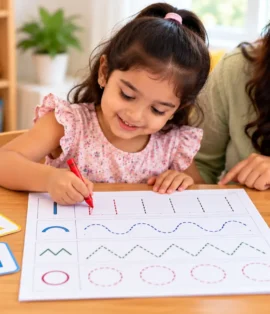
12. Practise with Printable Beginning Sounds Worksheets
Once children have explored beginning sounds through games, worksheets can provide additional practice.
Look for age-appropriate beginning sounds worksheets with clear pictures and a small selection of letters.
Useful worksheet activities include:
-
Match the letter: Connect a picture to the letter representing its beginning sound.
-
Circle the correct letter: Look at a picture and choose the matching initial letter.
-
Sort the pictures: Group pictures according to their beginning sounds.
-
Complete the word: Fill in the missing first letter of a familiar word.
-
Colour by beginning sound: Colour pictures that start with a specified sound.
-
Trace and identify: Trace a letter and match it to a picture beginning with that sound.
Start with a few familiar consonant sounds, then introduce additional letters as your child becomes more confident.
Explore Kids Easy Learning for printable learning resources and suitable alphabet worksheets to support early phonics practice at home.
For the best results, combine worksheet activities with picture cards, household objects and listening games. Children benefit from hearing and saying sounds as well as recognising letters on a page.
How to Teach Beginning Letter Sounds Step by Step
If your child is new to phonics, introducing too many letters at once can make the activity confusing. A gradual approach helps children focus on hearing and recognising each sound.
Step 1: Start with familiar words.
Choose everyday words your child already knows, such as sun, ball, cat and moon.
Step 2: Emphasise the first sound.
Say the word clearly and draw attention to its beginning sound. For example, “Sssun starts with /s/.”
Step 3: Introduce the matching letter.
Show the letter S and explain that it represents the beginning sound in sun.
Step 4: Practise with different examples.
Find other words that begin with the same sound, such as sock or soup.
Step 5: Play sound matching games.
Use pictures, toys or household objects to help your child identify the words that start with the target sound.
Step 6: Add printable worksheets.
Once your child understands the activity, introduce worksheets to reinforce sound recognition and letter matching.
Keep sessions short and revisit familiar sounds regularly. Children may need several opportunities to hear and identify a sound before they recognise it consistently.
What Is the Difference Between Letter Names and Letter Sounds?
Letter names and letter sounds are connected, but they serve different purposes.
A letter name is what we call the letter. A letter sound is the sound it commonly represents in a word.
For example, the letter M is called “em,” while its usual sound at the beginning of moon is /m/.
When teaching phonics, help your child understand both the letter name and the sound.
| Letter | Letter name | Example word | Beginning sound |
|---|---|---|---|
| B | Bee | Ball | /b/ |
| M | Em | Moon | /m/ |
| S | Ess | Sun | /s/ |
| F | Eff | Fish | /f/ |
| T | Tee | Tiger | /t/ |
Some letters represent different sounds in different words. For example, C represents /k/ in cat and /s/ in city. Begin with common, straightforward examples before introducing these variations.
Common Mistakes to Avoid When Teaching Beginning Sounds
A few simple adjustments can make phonics activities more effective.
Teaching only letter names: Knowing that a letter is called B doesn't automatically mean a child knows its sound. Practise both.
Introducing too many sounds at once: Focus on a small selection of sounds and revisit them before adding more.
Using unfamiliar words: Children may struggle to identify the beginning sound if they don't know the word. Choose familiar objects and pictures.
Adding extra vowel sounds: When possible, model consonants cleanly. For example, practise /b/ rather than “buh.”
Relying only on worksheets: Include listening games, picture matching, conversation and real objects.
Expecting immediate accuracy: Give children time to listen and repeat. If they struggle, model the word again and try a simpler example.
Confusing letter recognition with sound recognition: A child may recognise a letter visually but still need practice identifying its sound in spoken words.
Frequently Asked Questions
Beginning letter sounds are the sounds heard at the start of spoken words. For example, ball begins with /b/, sun begins with /s/ and moon begins with /m/. Learning to identify these sounds is an important early phonics skill.
Start with familiar words and emphasise the first sound. Match objects or pictures with letters, play listening games and repeat the sound together. Introduce a few sounds at a time and use playful activities to reinforce learning.
Picture matching, sound sorting, household object hunts, animal games, phonics songs, storybook activities and printable beginning sounds worksheets are useful options. Combining several approaches helps children practise listening, speaking and recognising letters.
Children can begin exploring letter sounds during the preschool years, often around ages 3–5, depending on their interests and development. Introduce sounds through familiar words and playful activities rather than expecting every child to master them at the same age.
Yes. Worksheets can help children match pictures with initial letters, identify missing beginning letters and sort words by sound. They are most effective when combined with activities that allow children to hear, say and explore the sounds aloud.
Both are useful. Children benefit from becoming familiar with letter names and learning the sounds those letters commonly represent. You can introduce the two together by showing a letter, saying its name and practising a familiar word that begins with its sound.
Make Phonics Fun with Kids Easy Learning
Learning beginning letter sounds is an important step towards early reading, but it doesn't need to feel like a formal lesson.
Simple games, familiar objects, picture cards and storybooks give children opportunities to listen carefully and connect spoken words with letters. As their confidence grows, printable beginning sounds worksheets can provide another way to practise these skills.
Start with a few familiar sounds, celebrate your child's efforts and gradually introduce new words and letters.
Explore Kids Easy Learning for printable learning resources that make early literacy and alphabet practice engaging for little learners.