Key Highlights
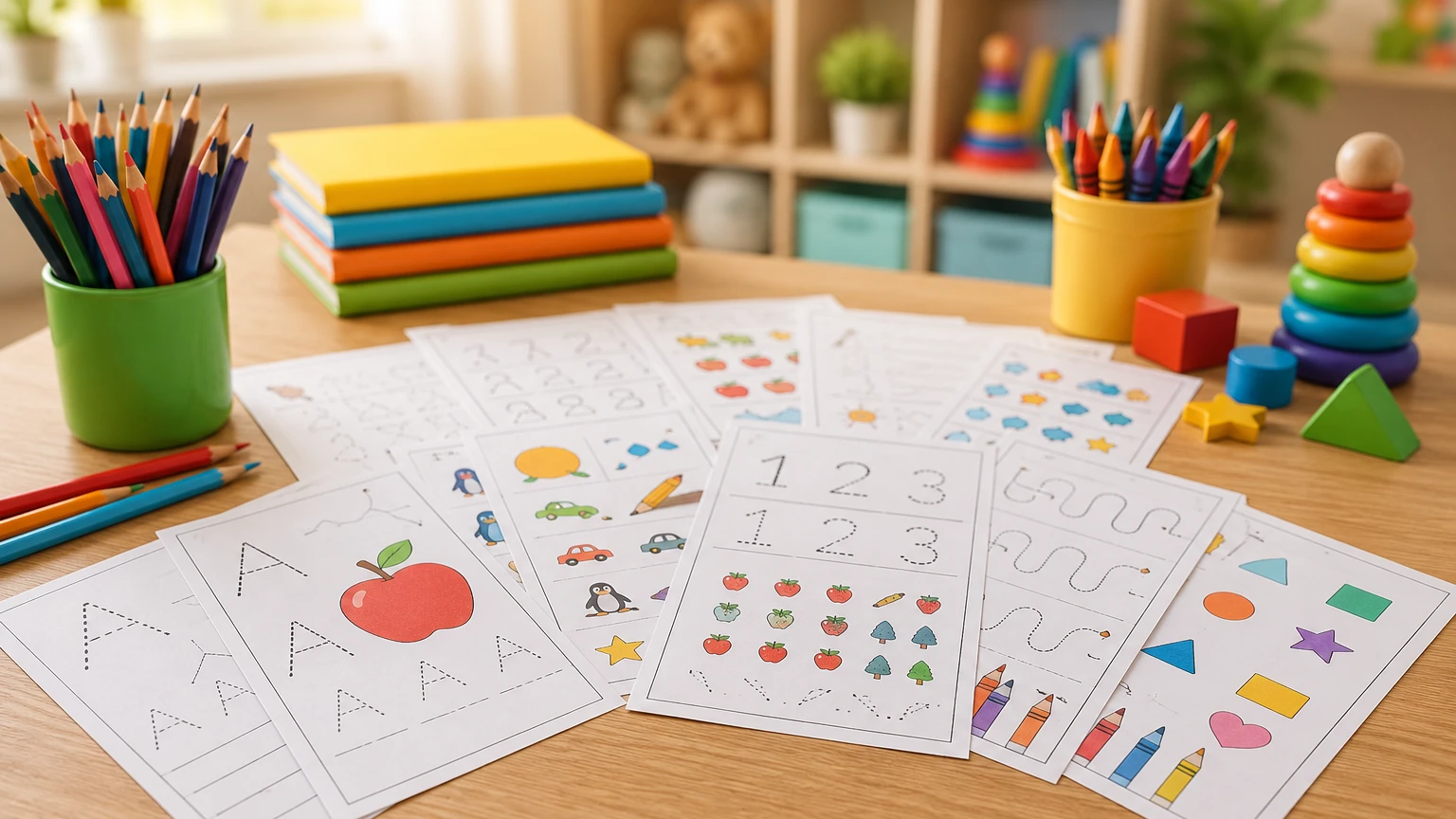
- Explore a growing collection of 30,000+ printable worksheets and learning resources.
- Find activities for preschool, kindergarten, and young learners.
- Practice alphabet and letter recognition.
- Build early math and counting skills.
- Develop pencil control through tracing activities.
- Learn shapes, colors, matching, and other foundational skills.
- Use printable worksheets at home, in classrooms, or for extra practice.
- Choose activities according to your child's age and current learning level.
Why Printable Worksheets Can Make Learning Easier
- Skill practice
- Revision
- Homework
- Classroom activities
- Home learning
- Quiet-time activities
- Learning centers
- Extra practice
A Growing Collection of 30,000+ Printable Worksheets
One child may be learning the alphabet while another is already practicing simple addition.
Children learn at different speeds, which means parents and teachers often need different types of resources.
Our growing collection of 30,000+ printable worksheets and learning resources covers a wide range of early learning topics.
Here are some of the areas you can explore.
1. Alphabet and Letter Worksheets
Learning the alphabet is an important early step toward reading and writing. Alphabet worksheets help children practice:
- Uppercase and lowercase letters
- Letter recognition
- Alphabet tracing
- Letter matching
- Beginning letters
- Alphabet coloring
- Picture and letter activities
Explore more ideas with our Best Alphabet Activities for Preschoolers.
Using worksheets together with songs, games, books, and hands-on activities can make letter learning more enjoyable.
2. Number and Counting Worksheets
Printable number worksheets can reinforce everyday counting experiences and help children practice:
- Number recognition
- Number tracing
- Counting objects
- Number matching
- Counting sequences
- Comparing quantities
- Simple number activities
These activities help children become more comfortable with numbers before moving on to advanced math concepts.
3. Early Math Worksheets
Early math is about more than memorizing numbers. Children gradually learn patterns, comparisons, relationships, and simple problem-solving.
Printable math worksheets can provide practice with:
- Counting
- Addition and subtraction
- Number comparison
- Patterns
- Sorting
- Number recognition
- Simple problem-solving
Explore more ideas in our Math Activities for Preschoolers.
Parents can also connect worksheet practice with everyday activities such as counting snacks, sorting toys, and comparing objects.
4. Tracing Worksheets for Early Writing Practice
Tracing activities help children develop pencil control and practice early writing movements.
Children can trace:
- Straight lines
- Curved lines
- Zigzag lines
- Shapes
- Letters
- Numbers
- Simple patterns
For young children, practice is more important than perfection. Every attempt is part of the learning process.
5. Shapes Worksheets
Children encounter shapes everywhere. Printable shapes worksheets can help them recognize and identify common shapes through:
- Shape matching
- Shape tracing
- Shape recognition
- Shape coloring
- Finding shapes
- Identifying shapes in pictures
After completing a worksheet, ask your child to find the same shapes around the house to turn everyday surroundings into a learning activity.
6. Colors Worksheets
Color worksheets help children identify and match common colors.
Make the activity interactive by asking questions such as, “Can you find something blue?” or “Which picture is yellow?” This turns a printable worksheet into a fun conversation between parent and child.
7. Matching Activities
Matching activities encourage children to identify relationships between objects, pictures, letters, numbers, colors, and shapes.
- Matching letters
- Matching numbers
- Matching colors
- Matching shapes
- Matching pictures
- Finding identical objects
- Connecting related items
These activities combine learning with visual discovery and are especially useful for young learners.
How Parents Can Use Printable Worksheets at Home
- You do not need to turn your home into a classroom.
- A few minutes of focused practice can be enough.
- For example, imagine a simple afternoon routine.
Make It a Short Activity
Connect Worksheets With Real Life
Let Children Choose
Celebrate Practice
How Teachers Can Use Printable Learning Resources
- Classroom practice
- Homework
- Revision
- Morning activities
- Independent work
- Small-group activities
- Early finishers
- Skill reinforcement
- Learning centers
30,000+ Resources Does Not Mean You Need to Use Them All
A Simple Way to Build a Learning Routine
- Monday: Alphabet practice
- Tuesday: Number and counting activities
- Wednesday: Shapes and colors
- Thursday: Tracing and writing practice
- Friday: Matching and review activities
Find the Right Printable Worksheets for Your Child
- A letter traced today.
- A number counted tomorrow.
- A shape recognized during play.
- A matching activity completed at the kitchen table.
Explore Kids Easy Learning
Frequently Asked Questions
Many of the resources are designed around early learning skills such as alphabet recognition, numbers, counting, tracing, shapes, colors, and matching. Choose activities based on your child's age and current ability.
Yes. Kindergarten children can use resources covering alphabet, early writing, numbers, counting, shapes, colors, and early math concepts.
Absolutely. Parents can use printable worksheets as part of a short home-learning routine alongside reading, games, crafts, and hands-on activities.
Yes. Printable worksheets can be useful for classroom practice, revision, homework, independent work, small-group activities, and skill reinforcement.
Kids Easy Learning has a growing collection of 30,000+ printable worksheets and learning resources covering a wide range of early learning topics.

VedaPlay Toys Review (2026) | Montessori Wooden Learning Toys
August 29, 2026[…] looking for a complete learning routine can pair these toys with our Printable Worksheets for Kids to reinforce concepts learned during […]