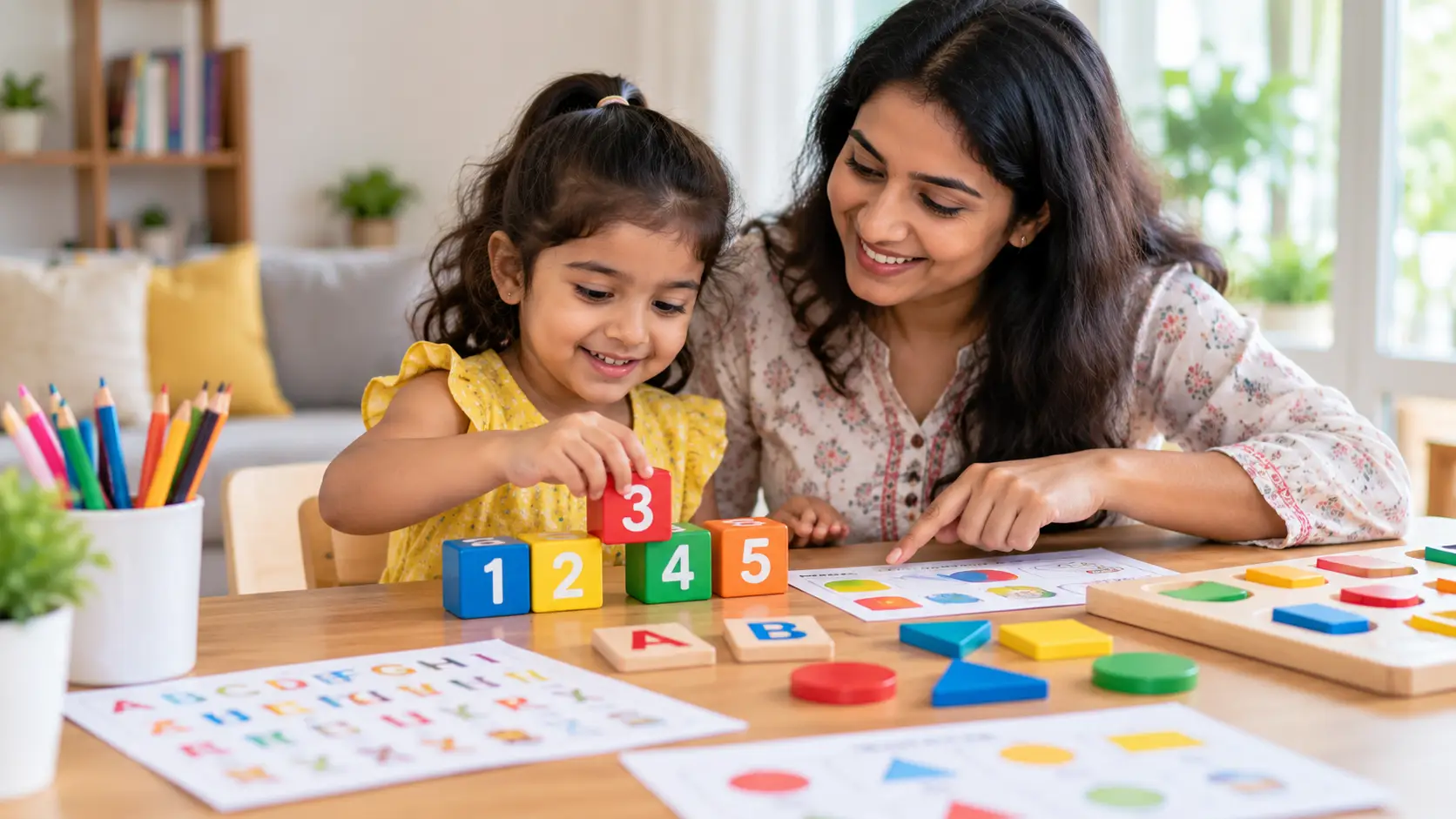
Preschool is an exciting stage when children begin exploring the world around them. They ask questions, discover new things, recognize patterns, and learn through everyday experiences. The good news is that you don't need expensive toys or complicated lesson plans to support their learning at home.
Simple preschool learning activities at home can help children develop early math, language, creativity, problem-solving, and fine motor skills while having fun with their parents.
Whether you have a three-year-old who is just beginning to recognize colors or a five-year-old preparing for kindergarten, small learning activities can make everyday moments more meaningful.
In this guide, we'll explore easy learning activities for preschoolers that parents and teachers can try using household objects, playful games, books, and printable worksheets.
Why Are Learning Activities Important for Preschoolers?
Young children learn best when they can see, touch, move, explore, and ask questions. Play-based activities allow them to practise new skills naturally instead of feeling that they are completing a formal lesson.
Regular learning opportunities can help preschoolers:
-
Recognize letters, numbers, colors, and shapes.
-
Develop early reading and language skills.
-
Improve hand-eye coordination and pencil control.
-
Build memory, concentration, and problem-solving abilities.
-
Develop curiosity, confidence, and independence.
-
Prepare for kindergarten through age-appropriate practice.
The aim isn't to teach everything in one day. It's to create enjoyable experiences that encourage children to explore and learn at their own pace.
10 Easy Preschool Learning Activities to Try at Home
Here are ten practical activities that parents and caregivers can introduce with minimal preparation.
1. Letter Recognition with Everyday Objects
Skills developed: Alphabet recognition, vocabulary, observation, and early literacy.
Help your child become familiar with letters by connecting them with objects they already know.
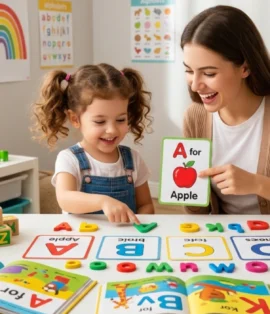
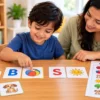
Write a letter on a piece of paper and ask your child to find something around the house that begins with that sound. For example, A for apple, B for ball, and C for cup.
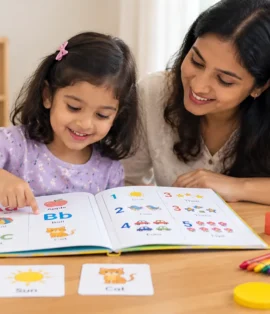
You can also use picture cards, alphabet books, or simple letter-matching games to make the activity more interactive.
Make it fun: Start with two or three familiar letters rather than introducing the entire alphabet at once. Encourage your child to say the letter and the object's name together.
For additional practice, explore our preschool activities and learning ideas.
2. Counting Toys and Household Objects
Skills developed: Number recognition, counting, comparison, and logical thinking.
Counting becomes easier when children can connect numbers with real objects.
Collect a few toy cars, blocks, spoons, or large household objects. Ask your child to count them aloud, touching each item once.
Try simple questions such as:
-
Can you find three blocks?
-
How many toy cars do you have?
-
Which group has more objects?
-
What happens if we add one more?
For younger preschoolers, begin with numbers from one to five. Children who are ready for more can practise counting to ten or beyond.
You can also try these fun math activities for preschoolers at home for more hands-on number practice.
3. Color Sorting Game
Skills developed: Color recognition, classification, observation, and vocabulary.
Gather a few safe objects in different colors, such as building blocks, crayons, or colored paper.
Ask your child to group objects by color. Once they understand the activity, introduce questions such as, "Can you find something yellow?" or "Which group has the most objects?"
You can make the game more challenging by asking children to sort objects by size or shape.
Parent tip: Let your child explain how they grouped the objects. Talking through their choices helps build vocabulary and encourages independent thinking.
4. Shape Hunt Around the House
Skills developed: Shape recognition, visual observation, and spatial awareness.
Children encounter shapes in everyday life, from plates and windows to books and building blocks.
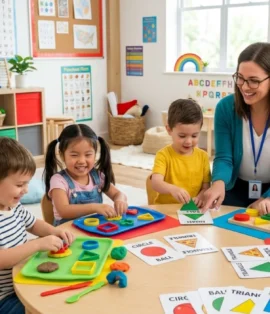
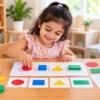
Introduce basic shapes such as circles, squares, triangles, and rectangles. Show your child an example and invite them to find similar shapes around the home.
For example:
-
Circle: A plate or clock.
-
Square: A small tile or picture frame.
-
Triangle: A triangular sign or shape cut from paper.
-
Rectangle: A book or door.
You can extend the activity by drawing different shapes on paper and asking your child to match them with objects they find.
For more structured practice, browse our printable worksheets for kids.
5. Storytelling and Picture Reading
Skills developed: Language, listening, imagination, memory, and comprehension.
Reading together is one of the simplest ways to introduce early literacy.
Choose a picture book with familiar objects, animals, or everyday situations. Read slowly and allow your child to look at the illustrations.
Instead of reading every page without stopping, ask questions such as:
-
What do you see in this picture?
-
What do you think will happen next?
-
Which character do you like?
-
Can you tell me the story in your own words?
Don't worry if your child invents a different story or skips some details. The goal is to encourage communication, imagination, and a love of books.
Even a short storytelling session can become a meaningful part of your child's day.
6. Tracing Lines, Letters, and Shapes
Skills developed: Fine motor skills, hand-eye coordination, pencil control, and writing readiness.
Before children begin writing letters independently, they benefit from practising simple hand movements.
Give your child a sheet of paper and crayons or pencils. Start with straight lines, curved lines, zigzags, and simple shapes.
As their confidence improves, introduce age-appropriate letter and number tracing activities.
Keep the focus on trying rather than staying perfectly within the lines. Every attempt helps children become more familiar with holding a pencil and controlling their movements.
You can find suitable practice materials in our printable worksheet collection.
7. Build and Create with Blocks
Skills developed: Creativity, spatial awareness, planning, and problem-solving.
Building activities encourage children to experiment with ideas and discover how objects fit together.
Give your child building blocks or other safe construction materials. Ask them to build a tower, make a small house, or create something of their choice.
You can introduce simple challenges:
-
Can you build a tower with five blocks?
-
Can you make a bridge?
-
What happens if you use a bigger block at the bottom?
-
Can you build the same structure again?
Let your child experiment rather than demonstrating every step. Trying different approaches helps develop confidence and early problem-solving skills.
8. Water Play and Simple Experiments
Skills developed: Observation, curiosity, early science concepts, and comparison.
A supervised water-play activity can introduce children to basic scientific ideas.
Using a shallow container of water, a few cups, and large safe objects, let your child explore what happens when they pour, fill, or transfer water between containers.
Ask questions such as:
-
Which cup holds more water?
-
What happens when we pour water into a bigger container?
-
Which objects float and which sink?
Allow children to make predictions before testing them.
Safety note: Water play requires continuous, close adult supervision. Never leave a young child unattended near water, even in a shallow container.
9. Sing, Clap, and Move
Skills developed: Listening, rhythm, coordination, language, and memory.
Songs and movement games combine physical activity with learning.
Sing familiar nursery rhymes, clap to a rhythm, or ask your child to follow simple movement instructions.
For example, you could say:
-
Clap your hands three times.
-
Jump two times.
-
Touch your head.
-
Turn around slowly.
You can also use songs that introduce letters, numbers, colors, and everyday vocabulary.
These activities are especially useful when children need a break from sitting or concentrating on a worksheet.
10. Complete a Simple Printable Worksheet
Skills developed: Early literacy, numeracy, visual recognition, and independent practice.
Hands-on activities are valuable, but printable worksheets can provide additional opportunities to practise a skill.
Choose one worksheet based on your child's current interests and abilities. It might involve matching pictures, tracing a letter, counting objects, identifying shapes, or coloring a simple picture.
Sit with your child when introducing a new activity. Explain what to do, complete an example together, and then let them try independently if they feel comfortable.
Explore free and printable learning resources to find activities suitable for preschool and kindergarten learners.
Remember that worksheets work best as one part of a balanced learning routine, alongside play, conversation, reading, and movement.
A Simple Daily Learning Routine for Preschoolers
You don't need to plan hours of lessons to support your child's development. A flexible routine with short activities can make learning easier to maintain.
Here's an example of a 20-minute learning session you can adapt to your child's attention span.
| Activity | Suggested time |
|---|---|
| Letter or picture recognition | 5 minutes |
| Counting or sorting game | 5 minutes |
| Drawing, tracing, or a printable worksheet | 5 minutes |
| Storytelling, songs, or movement | 5 minutes |
This is only a starting point, not a strict timetable. Some children may enjoy an activity for longer, while others may prefer shorter sessions spread throughout the day.
You can also use everyday moments for learning. Count fruit while preparing a snack, identify shapes during a walk, or talk about colors while putting away toys.
How to Make Home Learning Enjoyable
A positive learning environment matters more than having lots of materials or following a perfect schedule.
Follow Your Child's Interests
If your child loves animals, use animal pictures for counting, storytelling, sorting, and drawing. Connecting activities with familiar interests can make participation easier.
Keep Activities Age-Appropriate
Choose activities that are challenging enough to be interesting without being frustrating. Adjust the difficulty according to your child's abilities rather than comparing them with other children.
Use Everyday Materials
Paper, crayons, books, blocks, cups, and safe household objects can support a wide range of learning experiences. You don't need to purchase something new for every activity.
Encourage Questions and Exploration
Let your child ask questions, make predictions, and try different solutions. You don't always need to provide the answer immediately.
Celebrate Effort
Praise curiosity, persistence, and the willingness to try. Avoid turning every activity into a test or expecting perfect results.
Allow Breaks and Free Play
Preschoolers need opportunities to move, rest, and play independently. If your child loses interest, pause and return to the activity another time.
Printable Worksheets and Games for Extra Practice
As children become familiar with new concepts, a little additional practice can help reinforce what they have learned.
Kids Easy Learning offers printable resources that parents and teachers can use to complement everyday activities.
-
Math practice: Explore preschool and kindergarten math worksheets for counting, number recognition, shapes, and patterns.
-
Activity ideas: Browse the Preschool Activities collection for more ways to make learning playful.
-
Printable learning materials: Visit our worksheet library to find resources for different early learning skills.
Choose resources according to your child's age and interests. A short, enjoyable activity is often more useful than asking a preschooler to complete too many pages at once.
Frequently Asked Questions
Counting toys, sorting colors, identifying shapes, reading picture books, tracing lines, building with blocks, singing songs, and completing simple worksheets are useful starting points. Choose activities that match your child's interests and abilities.
There is no single ideal duration for every child. Start with short activities of around five to ten minutes and adjust according to your child's interest and attention. Learning can also happen naturally throughout everyday routines.
Use everyday objects such as books, crayons, blocks, clothing, and safe kitchen items. You can practise counting, sorting, color recognition, vocabulary, and problem-solving using materials already available at home.
Yes. Age-appropriate worksheets can reinforce early skills such as counting, alphabet recognition, tracing, matching, and shape identification. They are most effective when combined with hands-on play, conversation, and movement.
Depending on their age and development, children can practise recognizing some letters and numbers, identifying basic colors and shapes, listening to stories, following simple instructions, using crayons, and developing independence in everyday routines. Children develop at different rates, so avoid treating these skills as a rigid checklist.
Try changing the activity, introducing movement, using familiar objects, or letting your child choose between two options. Keep sessions short and avoid forcing participation when your child needs a break.
Final Thoughts
Helping your preschooler learn at home doesn't have to be complicated. Everyday activities such as counting toys, finding shapes, reading stories, singing songs, and drawing pictures can create valuable learning opportunities.
Start with one or two activities your child enjoys, introduce new ideas gradually, and allow plenty of time for free play and exploration.
When children feel supported and curious, learning becomes a natural part of everyday life.
Looking for more ideas? Explore Kids Easy Learning for printable worksheets and learning resources that can make home learning more engaging for both children and parents.