Easy Phonics Activities for Beginners: Fun Ways to Help Kids Read Faster
Key Highlights
- Phonics helps children connect letters with sounds.
- Simple daily activities improve reading confidence quickly.
- Games, songs, and storytelling make phonics fun for kids.
- Short practice sessions work better than long lessons.
- Parents and teachers can teach phonics using everyday items.
Easy Phonics Activities for Beginners
Learning to read is an exciting journey for every child. One of the best ways to build early reading skills is through phonics activities. Phonics teaches children how letters and sounds work together to form words.
For beginners, phonics should feel playful, interactive, and stress-free. Young learners understand better when they learn through games, songs, movement, and hands-on activities.
Whether you are a parent, preschool teacher, kindergarten teacher, or homeschooling parent, these easy phonics activities can make learning enjoyable and effective.
What Is Phonics?
Phonics is a method of teaching reading by connecting sounds with letters or groups of letters.
For example:
Letter B makes the sound “buh”
Letter C makes the sound “kuh”
Combining sounds like c-a-t forms the word “cat”
When children learn these sound-letter relationships, they begin reading simple words independently.
Why Phonics Is Important for Early Learners
Phonics builds a strong reading foundation. It helps children:
- Recognize letter sounds
- Improve pronunciation
- Build vocabulary
- Read simple books confidently
- Develop spelling skills
- Strengthen listening abilities
Most importantly, phonics boosts confidence in young learners.
Signs Your Child Is Ready for Phonics
Every child learns at their own pace. However, children are usually ready for beginner phonics activities when they can:
- Recognize some alphabet letters
- Sing the alphabet song
- Listen carefully to sounds
- Repeat simple words
- Show interest in books and stories
Do not worry if your child learns slowly. Consistent practice matters more than speed.
Fun and Easy Phonics Activities for Beginners
1. Letter Sound Treasure Hunt
This activity makes phonics exciting and active.
How to Play
Choose one letter sound, such as “S”.
Ask your child to find objects around the house that start with that sound:
- Spoon
- Sock
- Soap
This helps children connect sounds with real-life objects.
Bonus Tip
Use baskets or colorful boxes to collect matching items.
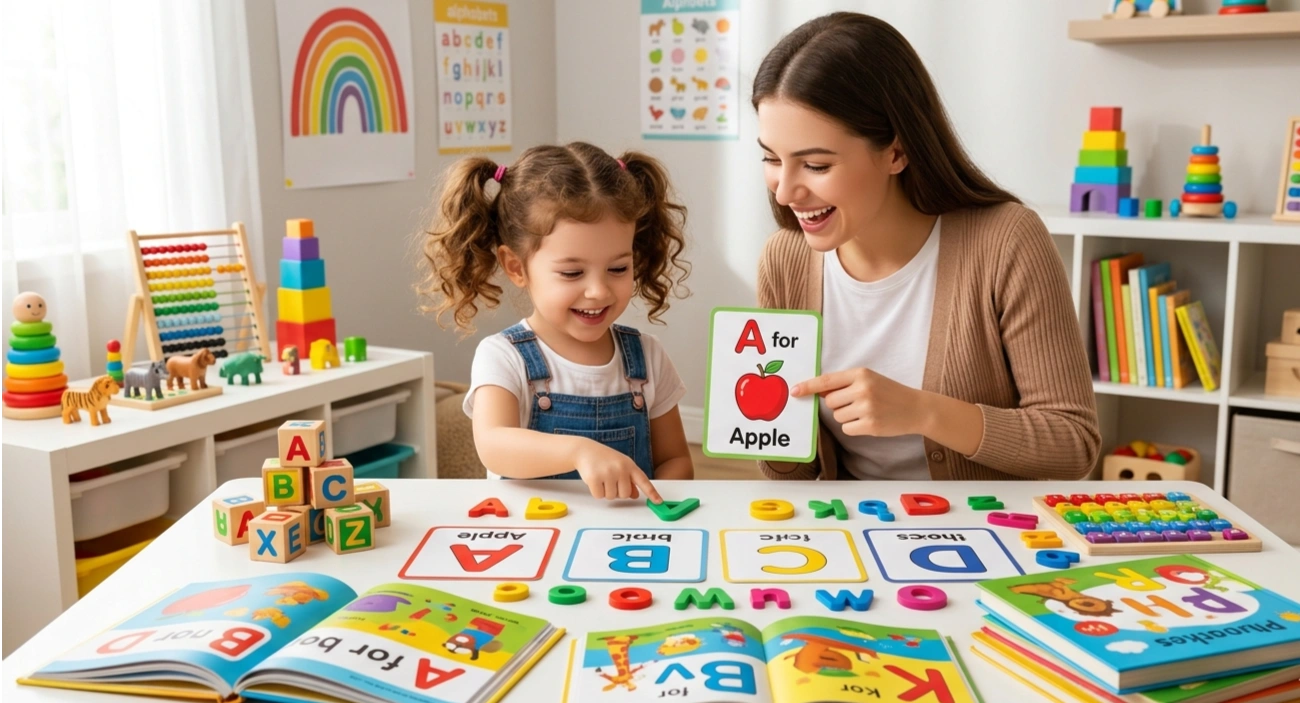
2. Alphabet Flashcard Games
Flashcards are simple but very effective for beginners.
Activity Ideas
- Show a flashcard and ask for the sound
- Match letters with pictures
- Arrange letters in alphabetical order
Keep sessions short and fun.
Parent Tip
Praise every small success. Positive encouragement builds confidence.
3. Phonics Songs and Rhymes
Children remember sounds faster through music.
Sing alphabet songs and phonics rhymes daily. Use clapping, dancing, or actions to keep kids engaged.
Popular Examples
- ABC Song
- Old MacDonald
- Rhyming nursery rhymes
Rhyming helps children hear sound patterns naturally.
4. Sound Matching Games
Sound matching improves listening skills.
How to Do It
Place picture cards on a table.
Ask your child:
“Which picture starts with the /m/ sound?”
They can point to:
- Moon
- Mango
- Monkey
This activity strengthens sound recognition.
5. Phonics Story Time
Reading aloud is one of the best phonics activities for beginners.
Choose simple books with repetitive sounds and easy words.
While Reading
- Point to letters
- Repeat sounds slowly
- Ask children to identify beginning sounds
For example:
“Ball starts with the /b/ sound.”
Children learn naturally through repeated listening.
6. Sand or Rice Letter Writing
Sensory activities make learning more memorable.
What You Need
- Tray
- Sand or rice
- Finger or stick
Ask your child to write letters while saying the sound aloud.
This activity improves:
- Letter recognition
- Hand coordination
- Memory skills
7. Build Simple Words
Once children know basic sounds, start blending simple words.
Example Words
- Cat
- Sun
- Dog
- Hat
Use magnetic letters, blocks, or paper cutouts.
Easy Blending Method
Say each sound slowly:
“C… A… T”
Then blend together:
“CAT!”
This helps children understand how reading works.
8. Phonics Coloring Activities
Coloring keeps children calm and focused.
You can create worksheets where children:
- Color pictures beginning with a specific sound
- Trace letters
- Match sounds with objects
These activities are especially helpful for preschool learners.
Daily Phonics Routine for Kids
Simple 20-Minute Routine
Here is an easy daily phonics learning plan:
| Activity | Time |
| ——————- | ——— |
| Alphabet Song | 5 Minutes |
| Flashcards Practice | 5 Minutes |
| Story Time | 5 Minutes |
| Sound Game | 5 Minutes |
Short and consistent practice gives better results than long lessons.
Common Mistakes to Avoid
Avoid These Beginner Phonics Mistakes
Teaching Letter Names Before Sounds
Children should first learn sounds before focusing heavily on letter names.
Long Study Sessions
Young children lose focus quickly. Keep lessons short and playful.
Too Much Pressure
Avoid comparing children with others. Every child learns differently.
Skipping Revision
Repetition helps children remember sounds better.
Best Tips for Parents and Teachers
Make Learning Fun Every Day
Children learn best when they enjoy the process.
Use Everyday Moments
Teach sounds during cooking, shopping, or travel.
Example:
“B is for Banana.”
Celebrate Small Progress
Clap, smile, and encourage your child often.
Read Together Daily
Even 10 minutes of reading every day can improve language skills greatly.
Limit Screen Time
Hands-on learning activities are more effective for beginners.
Benefits of Early Phonics Learning
Children who learn phonics early often:
- Read confidently
- Speak clearly
- Develop better vocabulary
- Enjoy books more
- Become independent learners
Most importantly, they build a lifelong love for reading.
Conclusion
Teaching phonics does not need expensive materials or complicated lessons. Simple games, songs, stories, and daily practice can make a huge difference in your child’s reading journey.
The key is consistency, patience, and making learning fun.
Start with small activities, celebrate progress, and enjoy every learning moment together. With the right support, children can develop strong reading skills and confidence from an early age.