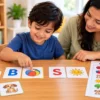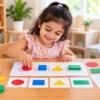
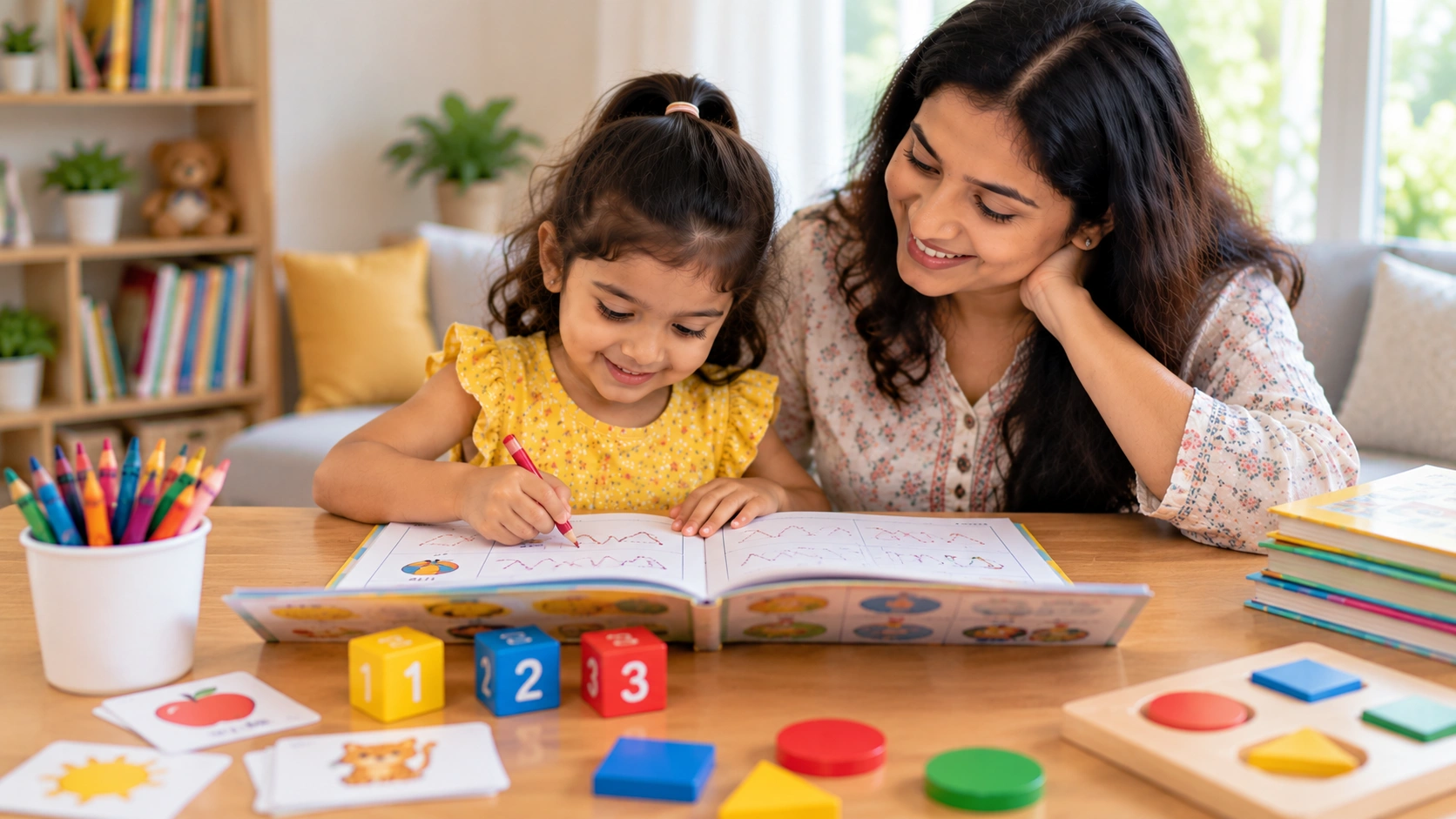
Finding the right activities for preschoolers doesn't have to be complicated. Children between the ages of three and five learn through play, exploration, drawing, listening, and trying new things. A good preschool activity book brings these experiences together in a simple format that parents and teachers can use at home or in the classroom.
If you're looking for a preschool activity book PDF, printable activity books can be a convenient way to introduce early learning concepts without needing lots of toys or expensive materials. You can print selected pages, let your child practise at their own pace, and repeat activities whenever they need more practice.
From alphabet recognition and counting to tracing, shapes, matching, and coloring, there are plenty of ways to make learning enjoyable.
In this guide, we'll explore what to look for in a preschool activity book, which activities are suitable for ages three to five, and how to use printable pages effectively.
What Is a Preschool Activity Book?
A preschool activity book is a collection of age-appropriate activities designed to help young children explore early learning skills. It may include picture-based exercises, tracing patterns, number activities, alphabet practice, matching games, coloring pages, and simple puzzles.
Some activity books focus on one subject, such as mathematics or handwriting. Others combine several learning areas in one collection.
Printable activity books offer additional flexibility because parents and teachers can print the pages they need rather than asking children to complete an entire book at once.
For preschoolers, the best activities are easy to understand, visually clear, and suitable for their current abilities.
Why Use a Preschool Activity Book PDF?
A printable preschool activity book can make it easier to provide structured learning opportunities without turning every day into a formal lesson.
Here are a few practical benefits.
1. Convenient Learning at Home
Parents can print selected activities and use them during a short learning session. A page about numbers, for example, can complement a counting game using toys or household objects.
2. Practice at Your Child's Pace
Children develop skills at different rates. Printable pages allow you to repeat familiar activities, introduce new ones gradually, and choose tasks that match your child's interests.
3. A Variety of Learning Activities
A well-rounded activity book may combine literacy, numeracy, visual recognition, fine motor practice, and creative activities. This gives children opportunities to explore different concepts.
4. Useful for Parents and Teachers
Parents can use printable activities for home learning, while teachers can select suitable pages for classroom practice, small-group activities, or additional reinforcement.
5. Flexible Printing
You can print only the pages you need, subject to the resource's download and printing terms. This can be useful when a child wants to repeat a favorite activity or needs more practice with a particular concept.
Remember that printable worksheets are only one part of early learning. Children also need conversation, movement, stories, hands-on exploration, and plenty of free play.
10 Printable Preschool Activities for Ages 3–5
Not every activity suits every preschooler. Start with simple tasks and gradually introduce more challenging ones as your child becomes comfortable.
1. Alphabet Recognition Worksheets
Suitable for: Introducing and practising letter recognition.
Alphabet activities help children become familiar with the shapes of letters and connect them with familiar objects and words.
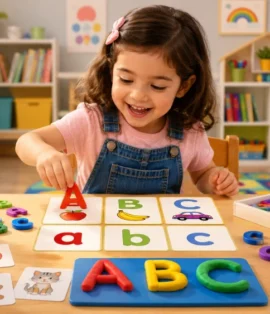
A printable alphabet page might ask children to match a letter with a picture, identify a particular letter, or color an object beginning with that letter.
For example, a child might connect A with an apple or B with a ball.
Start with a few letters at a time. You can also point out the same letters in storybooks, signs, and everyday objects.
Explore alphabet worksheets for kids for additional letter-based practice.
2. Number Recognition and Counting
Suitable for: Building early number skills.
Counting activities help children connect written numbers with quantities.
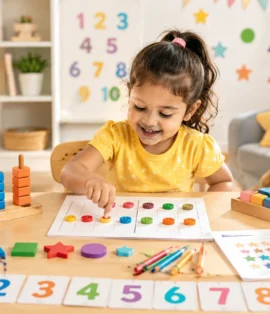
A printable page might show groups of objects and ask children to count them, match a number to a group, or identify which group contains more objects.
For younger preschoolers, begin with small quantities and familiar objects. Children who are ready for more can practise larger numbers and simple number sequences.
To make the activity more interactive, count real blocks or toys before completing the worksheet.
You can find more practice through number worksheets for kids.
3. Line Tracing and Pre-Writing Activities
Suitable for: Developing hand control and early writing readiness.
Before children write letters independently, they benefit from practising basic movements.
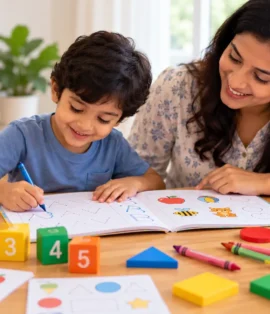
Tracing worksheets may include straight lines, curves, zigzags, loops, and simple paths. Children can follow these patterns using a crayon or pencil.
Begin with broad, simple lines and allow your child to practise without worrying about perfect accuracy.
Short tracing sessions are often more comfortable than asking preschoolers to complete several pages at once.
Explore tracing worksheets for related activities.
4. Shape Recognition Activities
Suitable for: Learning basic shapes and improving observation.
Shape activities encourage children to recognize circles, squares, triangles, rectangles, and other familiar forms.
A printable activity might ask children to match identical shapes, identify a particular shape in a group, or color all the circles on a page.
You can extend the activity by finding similar shapes around the home. A plate might look like a circle, while a book cover may resemble a rectangle.
Connecting worksheets with real objects helps children understand how shapes appear in everyday life.
5. Color Matching and Coloring Pages
Suitable for: Practising colors, observation, and creative expression.
Coloring activities give children opportunities to explore colors while developing control over crayons and other drawing materials.
Choose pages with clear pictures and enough space for children to color comfortably. You can also use matching activities that ask children to connect objects with the same color.
Rather than insisting that every picture be colored in a particular way, encourage children to make choices and explain them.
For more ideas, browse coloring worksheets for kids.
6. Picture Matching Games
Suitable for: Developing visual recognition and concentration.
Matching activities ask children to find two pictures that belong together or look alike.
Examples include matching identical animals, connecting objects with their shadows, pairing related pictures, or finding two items with the same shape.
Start with a small number of pictures and increase the difficulty when your child is ready.
You can also create your own matching game using picture cards, toys, or familiar objects.
7. Sorting and Classification Activities
Suitable for: Understanding similarities, differences, and categories.
Sorting activities encourage children to group objects according to a shared feature.
A worksheet might ask children to group animals, identify fruits, sort objects by size, or distinguish between items used indoors and outdoors.
Try using real objects first. Ask your child to place similar items together and explain what makes them alike.
These activities introduce early classification and logical thinking through simple, familiar examples.
8. Simple Patterns and Sequences
Suitable for: Building observation and early reasoning skills.
Patterns help children notice what repeats and predict what comes next.
A printable activity might show a sequence of red, blue, red, blue objects and ask the child to choose the next color.
You can also practise patterns using blocks, beads that are safe and age-appropriate, or movements such as clap, tap, clap, tap.
Begin with simple repeating patterns before introducing more complicated sequences.
9. Picture-Based Vocabulary Activities
Suitable for: Expanding vocabulary and encouraging conversation.
Picture worksheets can introduce children to animals, food, vehicles, body parts, household objects, and other familiar topics.
Ask your child to name the pictures, describe what they see, or identify objects that belong to the same group.
You can also ask simple open-ended questions, such as "What do you think this animal eats?" or "Where might we see this vehicle?"
The conversation around the activity is just as valuable as the page itself.
10. Simple Puzzles and Problem-Solving Pages
Suitable for: Encouraging observation, persistence, and early reasoning.
Age-appropriate puzzle pages may include finding the missing item, identifying differences, completing a picture, or choosing the object that belongs in a group.
These activities encourage children to look carefully and try different approaches.
If your child gets stuck, offer a small hint rather than immediately providing the answer. Let them make another attempt and celebrate the effort.
Which Preschool Activities Are Best for Ages 3, 4, and 5?
Children of the same age can have different interests and abilities. Use the following as a general guide rather than a strict developmental checklist.
| Age | Activities to consider | How to adapt them |
|---|---|---|
| 3 years | Large pictures, color matching, simple shapes, short tracing paths, counting small groups | Use fewer items, simple instructions, and plenty of hands-on play |
| 4 years | Letter recognition, counting, matching, basic patterns, shape identification, simple puzzles | Introduce a little more variety and encourage children to explain their choices |
| 5 years | Letter-sound activities, number sequences, more detailed tracing, simple patterns, picture-based problem-solving | Offer more challenging activities when the child is ready |
A child does not need to master every activity listed for their age. Choose resources based on their current abilities and adjust them when necessary.
How to Choose a Good Preschool Activity Book PDF
With so many printable resources available online, it helps to check a few things before downloading or printing an activity book.
Check the Age Suitability
Choose activities designed for preschool learners. Pages with very small pictures, complicated instructions, or too much writing may be frustrating for younger children.
Look for a Balanced Mix
A useful collection may include letters, numbers, shapes, tracing, visual matching, and creative activities. You don't need every topic in one book, but a balanced selection can provide variety.
Prefer Clear Instructions and Pictures
Children should be able to understand the activity with a short explanation from an adult. Clear layouts and recognizable pictures make pages easier to use.
Consider Printing Requirements
Check whether the PDF is free or paid, whether it can be downloaded directly, and whether there are any printing restrictions. If you plan to print frequently, simple layouts may be more practical.
Choose Activities That Encourage Participation
The best activity pages invite children to look, think, draw, match, count, or color. Avoid relying entirely on repetitive written exercises.
How to Use Printable Activity Books at Home
A printable activity book works best when it fits naturally into your child's day.
Start with one activity. Choose a page that matches something your child is currently learning. Explain the task and complete an example together if needed.
Keep sessions short. Begin with a few minutes and adjust to your child's interest. Stop or take a break when they become tired or frustrated.
Combine paper activities with play. Follow a counting worksheet with a toy-counting game or use a shape page as inspiration for a shape hunt around the home.
Encourage independence gradually. Demonstrate new activities first, then allow your child to try familiar tasks on their own.
Repeat favorites. Children often enjoy returning to familiar activities. Repetition can help them practise a skill and notice new details.
Celebrate effort. Focus on curiosity, participation, and trying again rather than completing every page perfectly.
Where to Find Preschool Activity Books and Printable Worksheets
If you're looking for learning materials to use at home or in the classroom, Kids Easy Learning offers preschool-focused printable resources to explore.
Start with the preschool worksheets collection to discover activities for early learning practice.
You can also explore these related collections:
-
Alphabet practice: Alphabet worksheets for kids
-
Early math: Number worksheets for kids
-
Writing readiness: Tracing worksheets
-
Creative activities: Coloring worksheets for kids
-
Downloadable learning resources: Preschool and kindergarten e-books
Explore the available resources and choose pages that suit your child's needs. Check the individual resource details for file formats, download access, and any printing requirements.
Frequently Asked Questions
A preschool activity book PDF is a digital document containing learning activities that can be viewed on a compatible device and, where printing is permitted, printed on paper. It may include alphabet practice, counting, tracing, coloring, matching, and other preschool activities.
Simple coloring, shape recognition, picture matching, counting, tracing, alphabet recognition, and basic patterns are common options. Choose activities according to the child's age, interests, and current abilities.
Yes. Printable activity books can provide opportunities to practise early literacy, numeracy, observation, and hand control. They are most useful when combined with conversation, play, reading, and hands-on learning.
There is no required number. Some children may enjoy one page, while others prefer a short activity followed by play. Focus on engagement and understanding rather than the number of completed pages.
Yes. Parents can use suitable pages for home learning, and teachers can select activities for classroom practice or small-group sessions. The activity should match the child's needs and the learning objective.
Check the age range, learning topics, clarity of instructions, PDF format, download requirements, and printing permissions. Make sure the activities are appropriate for the child's current abilities.
You can begin with the Kids Easy Learning preschool worksheets collection and explore the preschool and kindergarten e-books page for available learning resources.
Final Thoughts
A preschool activity book can be a practical way to introduce young children to letters, numbers, shapes, patterns, coloring, and early problem-solving.
The key is choosing activities that are appropriate for your child's abilities and making them part of a balanced learning routine. A few minutes of enjoyable practice, combined with play and conversation, can be more useful than completing a large number of pages.
Looking for printable learning activities for your preschooler? Explore the Kids Easy Learning preschool worksheets collection and discover resources to support your child's early learning journey.